
Automatic Seed Sprouter
An ESP32-controlled, food-grade stainless steel machine for automated seed sprouting — with timed spray cycles, vibration, load-cell harvest detection, and a MicroPython web interface.
Project Overview
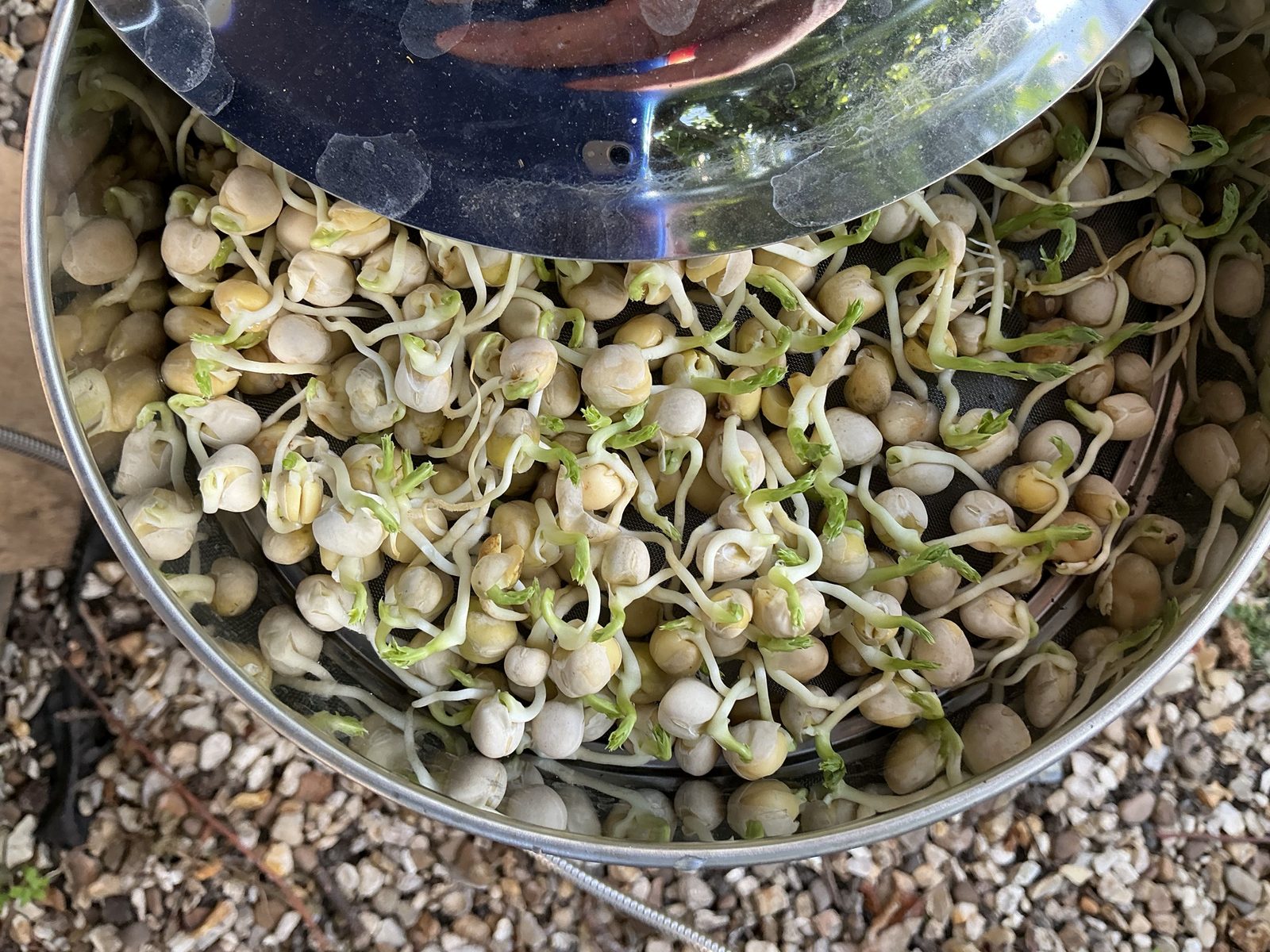
The Automatic Seed Sprouter is a new Virtual Workgroups project to design and build a fully automated sprouting machine suitable for producing food-quality sprouts (broccoli, pea shoots, radish) for supply to restaurants and food businesses. The prototype uses a 20 cm food-grade stainless steel funnel with removable sieves, an automated water spray system, and a coin vibration motor to prevent seed coagulation.
An ESP32 microcontroller running MicroPython manages the entire sprouting cycle — monitoring and logging each spray event, tracking temperature and humidity inside the enclosure, and using a load cell to detect when seeds have absorbed sufficient water and sprouted. The operator can monitor and control the machine remotely via a built-in web dashboard.
Key System Components
💧 Water System
- 12 V DC normally-closed solenoid valve (food-grade body)
- Spiral full-cone stainless steel spray nozzle (316 SS, 1/8" BSP)
- 5 µm inline sediment filter and pressure-reducing valve
- YF-S201 flow sensor to confirm spray delivery and detect blockages
- DS18B20 waterproof temperature probe on the water supply line
⚖️ Sprouting Detection
- 1 kg load cell (TAL221) + HX711 ADC under the funnel support
- Configurable weight-gain threshold triggers the ‘sprouted’ state
- Minimum sprouting time guard prevents false detection from water pooling
- State machine: IDLE → SEEDED → SPROUTING → SPROUTED → HARVEST_READY
🌡️ Environmental Monitoring
- DHT22 / SHT31 temperature and humidity sensor inside the enclosure hood
- Optimal target range: 18–24 °C, 70–90 % RH
- Optional CO₂ sensor (MH-Z19) as an early indicator of microbial activity
- Light sensor (BH1750) to verify opaque cover is in place
💻 Firmware & Web Interface
- MicroPython on ESP32-WROOM DevKit — Wi-Fi connected
- Seed profiles stored in JSON on LittleFS (spray interval, duration, thresholds)
- Web dashboard: live state, temperature, humidity, weight, last spray time
- Manual controls: trigger spray, trigger vibration, initiate cleaning cycle
- Downloadable CSV event log for full batch traceability
- OTA firmware updates (IDLE state only)
Prototype Status
The prototype uses a Walfos 20 cm stainless steel kitchen funnel (304 SS, dishwasher-safe, with fine and coarse mesh sieves) as the sprouting vessel. Hardware has been specified and initial components sourced. The stainless steel prototype is currently under construction.
Estimated prototype batch capacity: 60–200 g dry seed yielding 300–700 g sprouts per 5–10 day cycle depending on seed variety.
Food Safety
All wetted components meet food-contact material regulations (EU 10/2011 / FDA 21 CFR). A citric acid passivation procedure is carried out on all new stainless steel parts before first use. A four-stage inter-batch sanitisation procedure (automated flush, manual wash, citric acid or H₂O₂ soak, final rinse) is defined and logged for every batch.
🤝 Collaboration Opportunities
We are seeking collaborators — food producers, researchers, and technology partners — to advance this project. If you have relevant expertise or interest, we’d love to hear from you.
Get In Touch
GutterGrow
Vertical growing system with MicroPython software control — sister project to the Seed Sprouter.

Automated Plant Growing Systems
Broader platform for sensor-driven automated horticulture that shares firmware and hardware with the Sprouter.

Sensors & Actuators
The wireless sensor and actuator platform underpinning the Sprouter’s control system.